PNG has been talking about re-looking the taxes on resource projects, and taxes are always part of a PA. The tax review is to happen later this year per Polye and today O'Neill stated the obvious; taxes must be fair to PNG, landowners and to resource companies. PNG won't be stupid in this; will be interesting to see how things change later this year.
Source:
The National, Tuesday 16th April 2013
By GYNNIE KERO
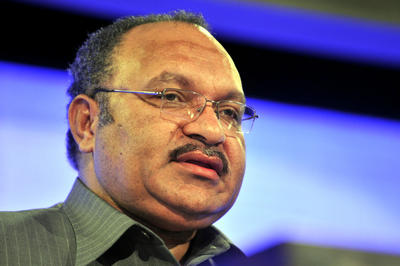
TAXES and charges imposed on the resource sector have to be fair to resource companies, landowners and citizens, says Prime Minister Peter O’Neill.
He said a panel of experts would be reviewing the taxation system, including a comprehensive review of the mining, oil and gas sectors’ taxes and charges.
“This is one of the most important reviews we have undertaken since Independence,” he said.
“I hope the members of the business councils will take the opportunity to contribute constructively to this process.
“It is also part of the government’s commitment last year to ensure the country’s economy lifted and encourage competition among export industry.”
O’Neill said infrastructure was a huge challenge for the government, the people and stakeholders.
“But it is also a budget that makes a real medium term commitment to spending on economic infrastructure.
“The challenge is actually on how we deliver these massive spending commitments to the nation.
“By decentralising, devolving, decision-making and resources to agencies closest to the people, the country can get better outcomes.
“We simply cannot continue the wait-and-see approach that has placed us in our current state of affairs – a collapsing education system, poor health care, increasing lawlessness and certainly aging infrastructure.”
In the 2013 budget, the government planned to borrow within the guidelines set under the Fiscal Responsibility Act, with a certainty of increase in revenue in the medium term.
“We must get the balance right – and we must get an outcome where all stakeholders are happy.
“The national interest must come first. We must secure a long-term investment model in our resource sector that is sustainable and meets the expectations of our people,” O’Neill said.
“The national interest must come first. We must secure a long-term investment model in our resource sector that is sustainable and meets the expectations of our people,” O’Neill said.
O'Neill and PNG look to not kill their Golden Goosie. As AU LNG projects delayed and cancelled more exploration and processing will take place next door in PNG.

Browse LNG Development downstream layout. Image Source: Woodside Petroleum
In the wake of the cancellation of the $45 billion James Price Point LNG development, a key business lobby in Australia has warned rising cost pressures are leading to abandonedconstruction projects and impacting the broader economy and jobs.
Business Council of Australia president Tony Shepard says last week’s decision by Woodside signaled a stark warning of the cost pressures facing our economy.
“(Friday’s) decision adds to the deferral of BHP’s Olympic Dam project as two very big examples of what the Business Council has been saying for some time, that Australia has become a high cost and low productivity place to do business and this is placing important investment at risk,” Shepard says.
“This is a worrying sign because these major projects are the main game in Australia’s economy.”
Shepard’s warning comes as cost blowouts on a number of significant resource developments have underpinned growing doubts about Australia’s ability to deliver large infrastructure and heavy industry projects within budget. Recent examples include a $9 billion blowout at Chevron’s Gorgon project and blowouts of $4 billion at BG Group’s Queensland Curtis LNG plant, $4 billion across the life of Citic Pacific’s Sino Iron Ore project and $2 billion for the Santos-led Gladstone LNG project.

Tony Shepard. Image Source: Australian Aging Agenda
Along with the natural complexity of large scale developments, blowouts have been caused by the high Australian dollar, rising labour costs and low productivity gains.
Citing last Thursday’s jump in unemployment (up 0.2 per cent to 5.6 per cent) Shepard says the impact of rising costs is spilling into the broader economy and that while the Australian economy remains sound, warning signs are building about the need to lift productivity.
He says the government needs to resist urges to increase business taxes to plug fiscal holes in the budget and press ahead with tax and labour reform as well as efforts to reduce red tape.
“We can no longer avoid the need to put in place a plan for comprehensive tax reform, to reform our workplaces so they are more competitive and flexible, to end the rising tide of red tape such as our inefficient and costly environmental approvals and to improve our project planning approval times,” Shepard says.
“Getting the cost of doing business down is a project that must succeed for the long-term prosperity of all Australians.”
O'Neill is very aware of the cost-blowouts for the Aussie LNG projects and he wants to avoid this. The taxation of "petroleum" projects is being looked at, but we all know that this sector is still very young in PNG. They will tread carefully and take into consideration the World Bank comments for reviewing the tax structure. This story refers to the 2013 Budget language and that was primarily aimed at the mining sector which is much more mature in PNG and has left the Treasury short over the years. Mining is the primary focus of this review. This article from the EastAsia Forum explains a lot of what is going on in PNG with this tax review, the reorg of SOEs (including the reasons for abolishing IPBC; it was organized as a "trust" and the ADB said it would be better to have this entity be a "holding company" , etc. I don't believe we have much to worry about regarding anything drastic being done with taxes for IOC's project.
Author: Stephen Howes, ANU
Papua New Guinea experienced yet another year of high growth in 2012: GDP growth over the past 10 years has averaged close to 6 per cent.
Growth is expected to slow this year, but the medium-term outlook remains positive.
Yet the World Bank’s new country strategy for PNG states that poverty levels ‘have not changed significantly over the last 15 years’. In the capital, Port Moresby, poverty has actually risen over this period.
Many refer to the last decade as one of lost opportunity. Government revenue almost tripled, but there seems to be little to show for it. The recent observations of one PNG researcher, Andrew Anton Mako, are telling:
I am from a very remote village deep in the Highlands of PNG. In the last fifteen years, the single health center, the primary school which I attended as a boy, an airstrip that brings supplies to the village, and agricultural extension services have all closed down, and shrubs are now growing on a new road which was built in the late 1990s to connect my village to the nearest town. The 10,000 plus people in that part of the country are literally struggling each day.
How can PNG do a better job of converting growth into development?
There are no easy answers, but five issues will loom large in 2013. First, the new O’Neill-led government has decided to spend big, increasing expenditure by almost 30 per cent in the 2013 budget, pushing the deficit from 1 to 7 per cent of GDP, and devolving expenditure to lower levels of government. Effective expenditure is key to improving development prospects, but the new budget strategy is fraught with risk. The projections which return the budget to balance by 2015 assume real cuts to government salaries, which brings their credibility into question, but the bigger issue is whether the large increase in funds will be well spent.
The government also announced in the budget a review of mining taxation. This is particularly welcome because of suspicions that PNG’s mineral projects are riddled with tax exemptions.
Second, 2013 will be an important year for PNG’s new sovereign wealth fund (SWF). Too often, the SWF is seen as the key for PNG to avoid the resource curse. In fact, it’s only one piece of the puzzle, and it remains to be seen whether the SWF will make a positive difference. With the decline in commodity prices, it now seems unlikely that any funds will flow from government tax revenue into the SWF in the foreseeable future. But dividends from the country’s mega LNG Project also go to the SWF. Whereas tax revenues were to be saved (in the Stabilisation Fund), the dividends will be spent (through the Development Fund). Yet the legislation to determine spending rules for the Development Fund has not yet been seen.
That’s a real gap, and a risk: depending on design, including fiduciary restraints, the SWF might make things worse than if the dividends were received and spent within the budget, like any other revenue source. Since LNG dividends will start to flow in 2015, the government has to fix this problem soon.
Third, the O’Neill government has been commendably active on corruption. But will we see in 2013 the establishment of an Anti-Corruption Commission, its key election promise?
Fourth, state-owned enterprises continue to be a drag on development rather than an agent for change. Essential services, such as electricity and water, are under state control and are dysfunctional for that reason. As former prime minister Sir Mekere Morauta has suggested, there seems to be a choice in PNG between ownership by the people and services to the people. Unfortunately, despite widespread agreement that the Morauta government’s 2002 privatisation of the PNG Banking Corporation was wildly successful, privatisation remains off the agenda.
While there might not be progress in this area in 2013, there could be regress. Most of PNG’s state-owned enterprises are held by a trust, the Independent Public Business Corporation (IPBC), on behalf of the government. The Asian Development Bank has recommended that the IPBC be converted from a trust to a holding company, and PNG’s minister for state-owned enterprises seems particularly interested in Singapore’s Temasek Holding Company as a potential model. If the IPBC is corporatised, it is only going to make it easier for the government to develop new enterprises, and for state involvement in the economy to grow rather than shrink.
Fifth, gender is a critical issue for PNG, a country where gender-based violence is an epidemic. As a result of last year’s elections, there are now three female members of parliament, up from just one. Three is still a small number, but the increase could be significant. Between them, the three hold the posts of minister, deputy minister and provincial governor. Two are party colleagues of the PNG treasurer, Don Polye. If the three MPs can get support from powerful allies such as Polye, there is at least a possibility that 2013 could be the year in which gender at last gets the attention it deserves in PNG.
Overall, opportunities and risks in PNG are finely balanced. On the positive side, not only is there more revenue and more job creation, but with the passing of the political torch from Somare to a younger generation has come a welcome impatience for change, and a number of promising initiatives. And political stability was regained in PNG last year. But, as the Somare era showed, political stability is not sufficient for development in PNG. This year won’t see a turn-around in PNG’s development prospects, but how the government handles the five issues above will go a long way to determining whether it will be a year of development progress or regress.
Stephen Howes is Professor of Economics and Director of the Development Policy Centre, Crawford School of Public Policy, the Australian National University. An expanded version of this essay is also posted here.
http://www.eastasiaforum.org/2013/01/20/can-png-convert-growth-into-development/
The timetable for this tax review is important to understand also. Per a story on EMTV via philstar.com this tax review is scheduled to just now get started with the first part of the review to be submitted to Polye this October and the review process is to be completed by July 2014. Does this mean all activities in PNG come to a screaching halt or will face major delays. Nope. Just like the reorg going on with Petromin, IPBC and the SOEs; activities will (and must) continue and agreements will be struck. This stuff happens regularly in a developing country. Carry on!

