Posts: 4,164
Threads: 1,500
Joined: Dec 2011
Reputation:
268
11-13-2012, 12:30 AM
(This post was last modified: 11-13-2012, 12:34 AM by Tree.)
'TxPm' pid='12276' dateline='<a href="tel:1352728 Wrote:I'm not an engineer or project manager I'm a finance guy but when I read this it seems like the $700,000 XOM & Co had little control over but the $1.2bil In delays/stoppages it seems to me should have been avoided with a good management team in place UNLESS that was due to PNG politics etc which in that case it puts IOC's delays into context. Finally on the $1.4Bil in foreign exchange risk with a project of this magnitude & all the unknowns surrounding the project you would think someone in management would have thought about hedging their foreign exchange risk through currency swaps or a forward contract. With all the other "Risks" associated with the project why would you let exchange risk be another unknown factor. Just my thoughts
Exactly tx, thats why it appears half of these overruns were avoidable. 'Adverse logistics' sounds wasteful too.
These overruns of almost 20% tips the scale in Ewc/Flex favor in Gulf LNG. Remember, LNG facility capex is 100% the responsibility of Ewc and Flex as they receive 14.5% royalty of LNG sales as compensation. No LNG overruns for IOC/PNG are possible. IOC pre FID investment in infrastructure, engineering, social and environmental mapping will keep on island cost surprises to a minimum for Ewc/flex and all other contractors. Elliot's deep pockets back Ewc and SHI guaranteed a delivered and commissioned Flex flng. IOC has construction cost risks with other aspects of the project and its a good thing Henry and LNG team are masters at costs control.
Posts: 6,851
Threads: 697
Joined: Dec 2011
Reputation:
441
Great point Treedorf; in Henry's round table videos that Mauicek found last year Henry mentioned the dreaded change order costs that normally plague a project. With EWC and Flex the costs are the risk of the company/contractor bringing the plant. It's the guaranteed maximum project costing we are seeing more and more today. Doc Aldorf is a pioneer before his time.
Posts: 6,851
Threads: 697
Joined: Dec 2011
Reputation:
441
Oil Search is scrambling a bit as they are a 29% equity partner on PNG LNG:
"The biggest share of the $US3.3 billion ($A3.18 billion) blowout was blamed on foreign exchange costs of $US1.4 billion ($A1.35 billion), including a high Australian dollar and PNG kina.
Delays from work stoppages by unhappy workers and land-access issues had added $US1.2 billion ($A1.16 billion.) Building and drilling costs, and adverse weather caused a $US700 million ($A676.43 million) hike.
The bad news was announced by project operator Exxon Mobil Corporation, which owns 33 per cent of the project compared to Oil Search's 29 per cent stake.
.
. .
The project is Oil Search's most important - and the largest resources project in PNG.
Mr Botten said it was a difficult and disappointing day.
Oil Search still owed $US740 million ($A715.08 million) in equity share costs through to the end of 2014, including an additional $US300 million ($A289.90 million) in equity following Monday's statement .
"There is capacity we believe to cover this ... the indications from the operator and our initial discussion with the banks is that the capacity is there," Mr Botten told an analysts' briefing, adding that a re-financing of funds was due in 2013.
Exxon Mobil appeared to have assumed levels of productivity based on past results, when estimating project costs.
"I believe $US19 billion as presented to us - subject to further review - is a reasonably conservative number which should take us through to first sales with contingencies covering ongoing issues," Mr Botten said."
This article states that OSH must come up with an additional $300 million based on today's statement by Exxon, but that's just on the exchange rate piece of it ($1.4 billion x 29% = $300 million). Their actual part of this is $957 million ($3.3 billion x 29%). If people think IOC has tight cash, what do they say about OSH? Another reason that O'Neill has been swayed to strongly consider modular/FLNG for Gulf I bet. The government owns a piece of OSH and relies on dividends and pps appreciation. This hurts that even more. Cost overruns on PNG LNG must be high on NEC's concern list for the LNG projects. Would be very reassuring to have a known amount when a project cost is agreed upon. EWC and Flex options offer that to PNG. Doc Aldorf is looking smarter every day.
http://www.theaustralian.com.au/business...6514907830
Posts: 689
Threads: 43
Joined: Jan 2012
Reputation:
54
Bingo Palmerooski - Henry gets the incentive thingie.
Posts: 4,164
Threads: 1,500
Joined: Dec 2011
Reputation:
268
Let's check this math. PNG LNG gains 5% production capability through 'system-wide optimisations' for a meager 21% total project cost blow-out?? Seems like fuzzy math and not even Phil could come up with such a monumental lie.
**********
Esso Highlands Limited (EHL), operator of the PNG LNG Project, has announced that the Project capacity has increased by 5 percent to 6.9 million tonnes per year from 6.6 million tonnes per year. The increase has been achieved through system-wide optimisations as well as some minor modifications.
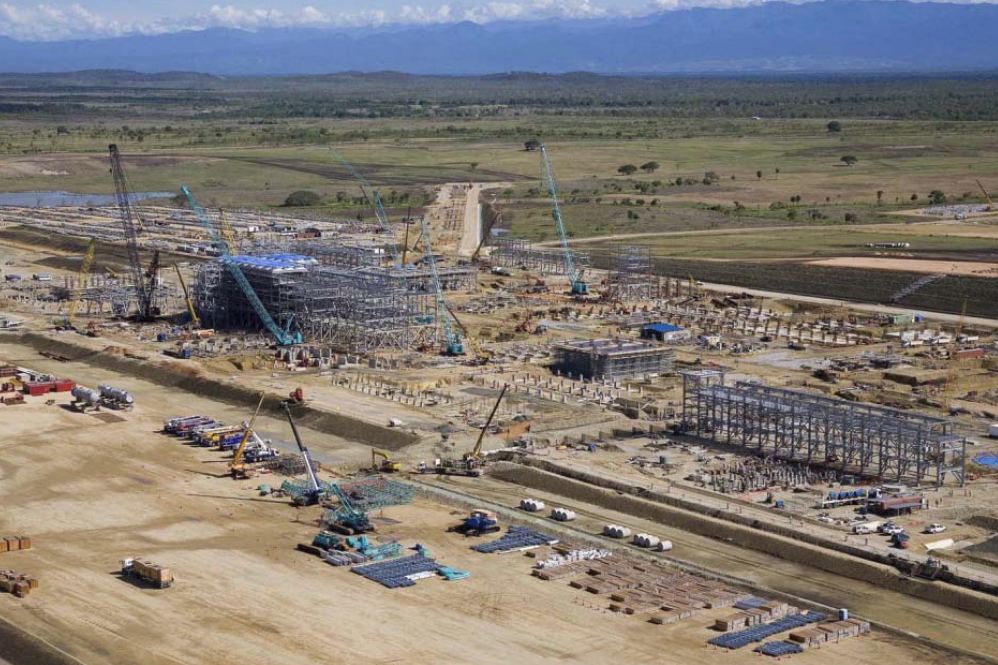
Progress is being achieved across all parts of the Project. Drilling is under way on two production wells, the offshore pipeline has been completed, all major process equipment for the LNG plant and all pipe rack modules on the LNG jetty have been installed, all piling is complete and foundations are under way at the Hides Gas Conditioning Plant.
Construction progress is on track at the Komo Airfield, where laying of the runway asphalt is under way, and the movement of materials via the Highlands Highway to Hides is exceeding plan.
The Project remains on track to achieve start-up in 2014.The estimated Project cost has increased from $15.7 billion to $19 billion (excluding Port Moresby administration facilities and shipping). Foreign exchange is the largest single contributor of the increase and to a lesser extent, delays from work stoppages due to community disruptions and land access led to increased construction and drilling costs. Extraordinary logistics and weather challenges also increased costs. In particular, rainfall exceeded historic norms for most of the last two years.
Posts: 6,851
Threads: 697
Joined: Dec 2011
Reputation:
441
Here's Exxon's explanation:
""Despite the cost increase, project economics are helped by the 5% increase in plant capacity and approximately 30% increase in commodity pricing since project funding in 2009," Exxon said in a statement."
This may hold for today as it does for IOC as it's realized benefit from rising LNG pricing, but that has now leveled off. Should LNG prices drop, IOC is in a much better position to absorb a drop than PNG PNG.
Posts: 690
Threads: 41
Joined: Jun 2012
Reputation:
87
There is a good piece on the Budget on PNG Industry News & it brings up some interesting points on the PNG LNG budget:
http://www.pngindustrynews.net/storyview.asp?storyid=9641543§ionsource=s0
"One of the most sobering pieces of news for O’Neill to contend with is the big cost blowout for the PNG LNG Project, now estimated at US$19 billion rather than US$15.7 billion. The increase could well reduce the early dividends for government equity and impact on corporate tax revenues.
For the wider world, it indicates PNG remains a difficult place to do business, despite being well endowed with the immense wealth of its resource base.
For the PNG government, which has signalled plans to raise a K6 billion loan from China, it means it must now look for up to US$1 billion more to pay for its share of those additional costs."
Posts: 8,568
Threads: 1,342
Joined: Dec 2011
Reputation:
380
'TxPm' pid='12311' datel Wrote:There is a good piece on the Budget on PNG Industry News & it brings up some interesting points on the PNG LNG budget: http://www.pngindustrynews.net/storyview.asp?storyid=9641543§ionsource=s0 "One of the most sobering pieces of news for O’Neill to contend with is the big cost blowout for the PNG LNG Project, now estimated at US$19 billion rather than US$15.7 billion. The increase could well reduce the early dividends for government equity and impact on corporate tax revenues. For the wider world, it indicates PNG remains a difficult place to do business, despite being well endowed with the immense wealth of its resource base. For the PNG government, which has signalled plans to raise a K6 billion loan from China, it means it must now look for up to US$1 billion more to pay for its share of those additional costs."
TX wrong conclusion. The cost blowout is LNG related and those costs have all over the world gone exponential. See any of the Australian projects. IOC had a plan to contain cost. That was EWC and FLEX paid for all the costs and over runs. Henry was smart . Many think that he was a genius. The PNG govt needed dollars are 20% times $3.3 Billion or today would be $660 million. The Exxon project nailed the PNG govt the way the deal was written.Exxon gets all its investment back before PNG gets much. Now will IOC reinstate the EWC plan. Sure looks that way.
Posts: 6,851
Threads: 697
Joined: Dec 2011
Reputation:
441
Also that article has the Wantok authorship. Always slants things to negative. He barely mentions the efficiency gains that have been realized of 5% along with the increase in commodity prices that have occurred since the project achieved FID. That is a 20% increase in pricing. Not sure how much of that can be realized as I assume those who committed to offtakes have some protection against price increases during construction. So it's not all bad news. A one-time sunk cost offset by 20 or more years of production which will now be higher.
Like Ken says, the IOC project if with EWC will be shielded against cost overruns for most part. Plus, if XOM has found ways to make this stick-built plant more efficient, don't you think EWC has done the same by working with Siemens and Chart? I think so. With Henry's plan EWC also benefits by making their plants more efficient. They are set to receive 14.5% of production and if the plants are more efficient, that 14.5% is of a higher number. Doc Aldorf is a pretty wise guy.
Posts: 8,568
Threads: 1,342
Joined: Dec 2011
Reputation:
380
Heres the Australian Herald
OIL Search insists it will meet its funding share of the massive Papua New Guinea liquefied natural gas (PNG LNG) after costs blew out by 21 per cent to $US19 billion ($A18.34 billion).
The cost of a liquefied natural gas project in Papua New Guinea has increased to $A18.34 billion. AAP
.
.
Oil Search managing director Peter Botten said he would be chasing further information from operator Exxon Mobil about the levels of foreign exchange exposure carried by the project.
It was not currently particularly transparent, he told an analysts' briefing.
The biggest share of the $US3.3 billion ($A3.18 billion) blowout was blamed on foreign exchange costs of $US1.4 billion ($A1.35 billion), including a high Australian dollar and PNG kina.
Delays from work stoppages by unhappy workers and land-access issues had added $US1.2 billion ($A1.16 billion.) Building and drilling costs, and adverse weather caused a $US700 million ($A676.43 million) hike.
The bad news was announced by project operator Exxon Mobil Corporation, which owns 33 per cent of the project compared to Oil Search's 29 per cent stake.
The project is Oil Search's most important - and the largest resources project in PNG.
Mr Botten said it was a difficult and disappointing day.
Oil Search still owed $US740 million ($A715.08 million) in equity share costs through to the end of 2014, including an additional $US300 million ($A289.90 million) in equity following Monday's statement .
"There is capacity we believe to cover this ... the indications from the operator and our initial discussion with the banks is that the capacity is there," Mr Botten told an analysts' briefing, adding that a re-financing of funds was due in 2013.
Exxon Mobil appeared to have assumed levels of productivity based on past results, when estimating project costs.
"I believe $US19 billion as presented to us - subject to further review - is a reasonably conservative number which should take us through to first sales with contingencies covering ongoing issues," Mr Botten said.
"The extent of the change is considerably beyond the upper end of what might have been expected from cash drawdowns and project progress to date."
There have been previous foreign exchange effects, bringing the total cost increases so far to $US2.1 billion ($A2.03 billion).
Santos, Japan's JX Nippon Oil and Gas Exploration, a unit of JX Holdings, and the Papua New Guinea government are also stakeholders in the project.
Santos expects to contribute an additional $US130 million ($A125.62 million) in equity.
Shares in Oil Search fell 25 cents to $7.11, while Santos dropped 25 cents to $11.02.
Mr Botten and Santos chief financial officer Andrew Seaton each said the PNG LNG project remained a "highly robust economic project".
The project is 70 per cent complete and remains on track for first production in 2014.
The project capacity had increased from 6.6 million tonnes a year to 6.9 million tonnes, Exxon Mobil said.
The project could double PNG's gross domestic product but is opposed by many landowners near its proposed pipeline, delaying progress and requiring security.
|