


Could electric cars improve Beijing's dirty air?
The first ever 'red-alert' for air pollution in Beijing has caused some drivers to take a closer look at electric cars, but some experts say that might not necessarily be the answer.
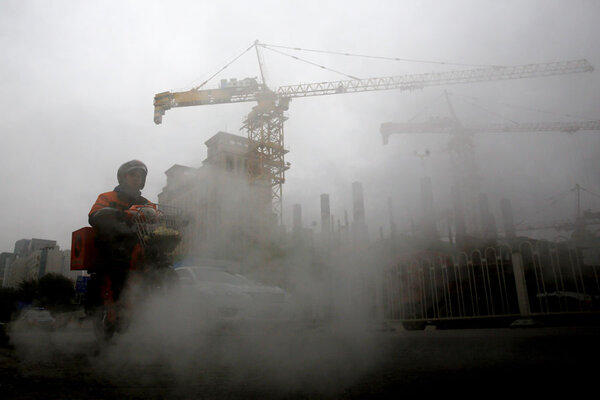
Beijing’s first-ever, three-day ‘red alert’ for air pollution on Monday has caused interest in the all-electric car market to spike, according to dealers.
But instead of an environmental wake-up call, prospective buyers are considering electric cars in Beijing out of a newfound practicality.
Monday's alert imposed strict measures to cut smog levels, including prohibiting both conventional and hybrid cars from driving on alternating days.

“I’m considering (an electric car) as the new policy means electric cars aren’t limited from driving on heavy pollution days while other types are,” Wang Chao, told Reuters Wednesday while surveying electric cars at a BYD Co Ltd dealership.
While driving restrictions are one reason for Beijing drivers to consider electric cars, ample government subsidies offer an even more appealing incentive. Mr. Wang tells Reuters that these subsidies would save him around 100,000 yuan (over $15 thousand) if he chose to buy a new electric car.
Regardless of the electric car market's potential, Peter Ford, The Christian Science Monitor’s Beijing correspondent, describes the blinding pollution as an immediate threat.
“When I poked my head out of my bedroom window this morning the acrid smell of coal hit the back of my throat immediately,” Mr. Ford explains. “You can smell a bad air day here the moment you wake up. As the day progressed the thick grey haze that blanked the city grew ever more impenetrable.”
But Ford says air pollution is a pervasive problem, despite the rarity of red alerts.
“I have survived Beijing’s first ever pollution ‘red alert’ day, and frankly, after several years of inhaling noxious smog, I am wondering what all the fuss is about,” says Ford. Last week, when the PM2.5 readings were three times higher, the authorities did not declare a red alert. “A red alert would have been disruptive; and on the first day of the COP21 climate change talks in Paris it would have been embarrassing.”
But even if all Chinese drivers switched to battery electric vehicles (BEV), the air pollution threat may not be alleviated.
In fact, a recent study published by Carnegie Mellon University, suggests an increase in BEVs in China may actually coincide with an increase in air pollution. Although electric cars reduce gasoline pollution, they still need to be recharged using electricity that is generated by coal-burning power plants.
And while a full transition to electric vehicles might cause more emissions from coal-fired power plants, Carnegie Mellon experts say such a move could still be a good thing.
“Even though EV adoption in China might increase local emissions,” the experts explain, “global emissions from automobiles could nevertheless plausibly decrease as a result of increased development and adoption of EV technology worldwide. Because China is the largest consumer and producer of cars, the trends in China’s auto market have the potential “to change the economic incentives for emerging technology development worldwide.”
But this week, for many in the city, car shopping is not on the agenda.
“Recently, the smog is so serious that people aren’t willing to go outside, so they call us to ask,” Li Hui, owner of several BYD dealerships, told Reuters.
